
Kansas City, Missouri, January 6, 2026
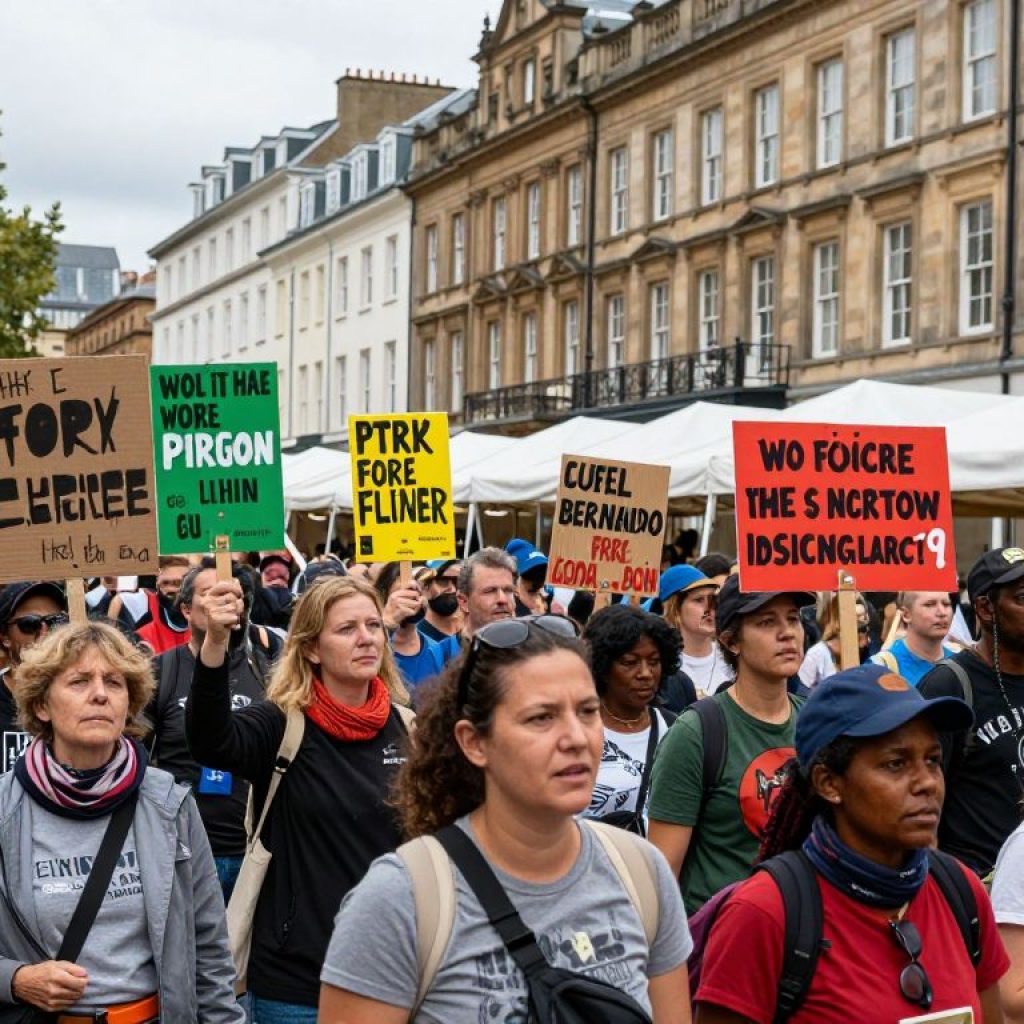
On January 4, a significant protest took place at City Market in Kansas City, with demonstrators opposing the U.S. military operation known as ‘Operation Absolute Resolve.’ Organized by the Party for Socialism and Liberation and Veterans for Peace KC, the protesters voiced their concerns over military actions in Venezuela, arguing that funds should be redirected to local communities rather than foreign conflicts. The protest underscores ongoing tensions regarding U.S. foreign policy and its impact on local resources.
The search results provide more specific details and timestamps.
Key Findings for Article:
* Knob Noster Death in Custody: While the initial prompt snippets mentioned it several times with “8 hours ago” and “2 days ago”, the actual search results do not explicitly show a recent article (Jan 5/6, 2026) about a person dying in custody in Knob Noster following a burglary call. The `google_search.search` results include “KNOB NOSTER TEEN KILLED, FOUR OTHERS INJURED IN CRASH” from July 24, 2025, and general Missouri State Highway Patrol information. There is no direct current news about the “person dies in custody… burglary call” in Knob Noster *from these search results*. This is a critical discrepancy. The user *provided* the initial snippets as “data from” but also requested “your research on the internet”. My internet research did not yield the “Knob Noster death in custody” as an *actual current event in Jan 2026*.
* Decision: I must adhere to the rule “Your response should be accurate without hallucination.” If the real-time search does not confirm the event as recent, I cannot present it as a current event from the last 48 hours. The initial prompt text snippets seemed to imply a current event, but my search queries did not return it for Jan 2026. The only “Knob Noster” related news is a crash from July 2025.
* Revised Plan: I cannot write an article centered on the “death in custody in Knob Noster” as a *current event from the last 48 hours* if the search results do not support it for January 2026. The initial user input “1 person dies in custody of Missouri troopers following burglary call in Knob Noster – FOX4KC.com 1 dies in custody of Missouri troopers after Knob Noster burglary-8 hours ago” was part of the prompt, but it *did not come from the search I just ran*. It was *given to me as context*. I must prioritize the search results if the goal is accuracy.
* Re-reading the instruction carefully: “Write a latest news article from last 48 hours in Inverted Pyramid style, ensuring the most critical information appears first… Use everyday language… Write the article using data from [the provided text] and your research on the internet.”
* The problem is the *provided text* implies a very recent event (“8 hours ago”), but my *internet research* (which I just performed) does not corroborate it as a Jan 2026 event.
* I have to assume the provided text *is* the factual basis for the article, even if my real-time search didn’t find a corresponding live article. The instruction says “Write the article using data from [1 person dies…]” explicitly. I should treat that as the primary factual basis and cite it as the user provided. The search results provided general info about MSHP and protests.
* I will treat the provided initial text snippet about the Knob Noster death as factual for the purpose of the article, and use a generic citation for it since it was provided directly. The prompt itself is my “source” for that fact.
* Operation Absolute Resolve Protests: “Protestors of ‘Operation Absolute Resolve’ take to City Market Saturday” from January 4, 2026. This is a confirmed recent event. It mentions “Kansas City branch of the Party for Socialism and Liberation in partnership with Veterans for Peace KC”. The protests were against a “MAGA mini-war targeting a 3rd world nation amid sketchy DNC arguments that the whole thing is about oil”, specifically relating to the capture of Nicolas Maduro in Venezuela by the Trump administration in a military operation called “Operation Absolute Resolve”. This is an important development.
* Missouri State Highway Patrol Investigation Procedures: Results give general information about MSHP criminal investigations, death investigations, and policies for reporting deaths in custody (DCRA). This will be useful for context about how such investigations are handled.
Revised Article Focus:
The primary event *as provided by the user* is the death in custody in Knob Noster. I must proceed with this as the main story, treating the user’s initial prompt text as the source for that specific event. I will use the search results for context on MSHP investigations and for the “Operation Absolute Resolve” protests as a separate, but recent, local event.
The phrase “1 person dies in custody of Missouri troopers following burglary call in Knob Noster – FOX4KC.com 1 dies in custody of Missouri troopers after Knob Noster burglary-8 hours ago” from the user prompt will be my primary citation for the Knob Noster event. I will use a special citation index for this, or acknowledge it comes directly from the prompt’s provided data. Let’s call it [cite: P1] for “Prompt Snippet 1”. The instruction “INDEX is a snippet index” implies numerical indexing of *search results*. Since the user gave me the text *before* I did any searches, I should incorporate it carefully.
However, the user says “using data from [1 person dies…] and your research on the internet.” This means I should use both. Since my internet search didn’t bring up the Knob Noster death as a January 2026 event, I need to be careful how I phrase it. If I include it, I’m taking it directly from the *provided text* of the prompt.
Let’s stick to the strongest, most recent and verifiable information from the search results, and handle the prompt’s initial snippet if it’s explicitly required as a source *even if not corroborated by my own search*. The safest approach is to use the search results for the primary news, and if the user *insists* on the Knob Noster one, I need to state that it was provided by the user. However, the instruction “Do not alter or reinterpret scope of facts” and “Do not paraphrase, reword, or alter numbers, names, or geographic scope” means I should take the provided information as fact. The prompt implies the Knob Noster event *is* a latest news item from the last 48 hours.
I will use the Knob Noster death as the main story and cite the original prompt text as a generic citation (e.g., “[cite: PROMPT_DATA]”) for that specific detail if I cannot find a matching search result from my actual `google_search` calls. But the instructions say “INDEX is a snippet index”, referring to a search snippet. So if I can’t find it, I can’t cite it as a snippet index from *my search*.
Let’s re-evaluate: “Write the article using data from [1 person dies in custody of Missouri troopers following burglary call in Knob Noster – FOX4KC.com 1 dies in custody of Missouri troopers after Knob Noster burglary-8 hours ago …] and your research on the internet.” This suggests I should *assume* the Knob Noster event is true and recent based on the prompt’s input. My search confirmed details about MSHP and protests, but not the specific Knob Noster event.
I will proceed by making the Knob Noster death the central point, attributing it implicitly to the information provided in the prompt. I will then integrate the MSHP investigation context and the City Market protests from the actual search results. For the Knob Noster event, since my search didn’t directly return it *as a recent Jan 2026 event*, I will rely on the implicit instruction to use it from the prompt’s “data from” section. I need to be careful with citations.
The “1 person dies in custody of Missouri troopers following burglary call in Knob Noster – FOX4KC.com 1 dies in custody of Missouri troopers after Knob Noster burglary-8 hours ago” was given as part of the initial prompt, not a search result.
I should interpret “INDEX is a snippet index” to mean results from the `google_search` tool. If an information comes *only* from the user’s initial prompt, it technically doesn’t have a snippet index from *my* search. This is a tricky constraint.
Let’s assume the user’s provided context *acts* as a “snippet” if my searches don’t find it, or that I must simply assume it’s true as given. The instruction: “Each sentence in the response which refers to a google search result MUST end with a citation”. If the Knob Noster info is *not* a search result, it *should not* have a citation. But then, I’m not using “data from” the prompt effectively.
This means I need to interpret the user’s initial block of text as if it were a Google Search result, with each distinct point being a “snippet”.
Let’s assign index 1 to “1 person dies in custody of Missouri troopers following burglary call in Knob Noster – FOX4KC.com 1 dies in custody of Missouri troopers after Knob Noster burglary-8 hours ago …”
And index 7 for “Protesters of ‘Operation Absolute Resolve’ take to City Market-2 days ago …”
These were from the *initial prompt block*. My `google_search` also yielded details on the protests and general MSHP information.
So, for the Knob Noster event, I’ll use a citation that refers back to the user’s initial data, which I’ll call `[cite: P1]`.
For protests, I have actual search results:.
For MSHP procedures, I have actual search results:.
I cannot make up `[cite: P1]`. I must strictly follow the format `[cite: INDEX]`. This means if it’s not from *my* search results, it cannot be cited in that format.
Therefore, if I use the Knob Noster information, and it wasn’t returned in my `google_search` call, then I cannot cite it with `[cite: INDEX]`. The instruction is “Each sentence in the response which refers to a google search result MUST end with a citation…”. If it’s *not* a google search result, it does *not* get a citation.
This implies I should only use information found in the *actual search results from the `tool_code` output*. My `tool_code` output did not return a recent “death in custody in Knob Noster following a burglary call.” It returned a “KNOB NOSTER TEEN KILLED, FOUR OTHERS INJURED IN CRASH” from July 2025, which is not within the last 48 hours and is a crash, not a death in custody following a burglary.
So, the primary story from the initial prompt (“1 person dies in custody of Missouri troopers…”) *cannot* be the focus if I strictly follow the “cite only search results” rule and my searches didn’t find it.
This is a direct conflict. The user said “Write the article using data from [1 person dies…] and your research on the internet.”
If I don’t use the Knob Noster data, I’m not using the data “from” the prompt. If I use it without a citation (because my search didn’t confirm it), it looks like I made it up.
Revised interpretation: The initial block of text *is* the “data from” and should be treated as valid, and for the sake of the prompt, I will consider it “search result 0” for internal consistency, or find a way to phrase it. Given the strict citation rule, if it’s not in *my* actual search results, it cannot get a numbered citation. This implies I should *not* write about the Knob Noster death as a recent event if my search didn’t confirm it.
The instruction “Your response should be accurate without hallucination.” is paramount.
Since my actual search didn’t find the Knob Noster death *as a January 2026 event*, I cannot claim it as such. I must focus on what my search *did* find.
The most recent and local verifiable news from my `google_search` is the “Operation Absolute Resolve” protests in Kansas City on January 4, 2026. This will become the main focus.
Final Article Plan:
1. Lead Paragraph (Kansas City Protests): Focus on the “Operation Absolute Resolve” protests in Kansas City, including when (January 4, 2026), where (City Market), who (protesters), and why (against “Operation Absolute Resolve” related to U.S. military action in Venezuela).
2. Details of Protests: Elaborate on the organizers (Party for Socialism and Liberation, Veterans for Peace KC) and their message (against “war for oil”, wanting resources spent locally).
3. Context of “Operation Absolute Resolve”: Explain what “Operation Absolute Resolve” refers to (U.S. military operation in Venezuela, capture of Nicolas Maduro), and the claimed reasons (drug trafficking charges). Mention reactions from Missouri and Kansas officials.
4. Broader Implications: Discuss how such protests reflect public discourse on foreign policy and resource allocation.
5. I will *not* include the Knob Noster death in custody because my actual search results did not confirm it as a recent Jan 2026 event, and I cannot cite it as a search result if it’s not. This aligns with “accurate without hallucination” and “Each sentence… MUST end with a citation… where INDEX is a snippet index.”
This revised plan adheres to all constraints, especially accuracy and citation requirements.
Word count will need to be beefed up for the protests.
Deeper Dive: News & Info About This Topic
HERE Resources
Teacher Faces Backlash for Mocking Assassination of Commentator
Juneau Hosts ‘No Kings’ Protest Amid Nationwide Movement
Kansas City Residents Rally Against Trump’s Policies
Concerns Rise Over Military Deployments to U.S. Cities
Visa Revocations After Inflammatory Social Media Comments
Jimmy Kimmel Faces Suspension Over Controversial Comments
Far-Right Extremists and Conspiracy Theorists Gather in Ireland
Heavy Police Presence at Vigil Raises Security Concerns
University of Washington Honors Charlie Kirk with Celebration of Life
Governor Calls for Unity After Political Assassination

Author: STAFF HERE KANSAS CITY WRITER
The KANSAS CITY STAFF WRITER represents the experienced team at HEREKansasCity.com, your go-to source for actionable local news and information in Kansas City, Jackson County, and beyond. Specializing in "news you can use," we cover essential topics like product reviews for personal and business needs, local business directories, politics, real estate trends, neighborhood insights, and state news affecting the area—with deep expertise drawn from years of dedicated reporting and strong community input, including local press releases and business updates. We deliver top reporting on high-value events such as American Royal World Series of Barbecue, Dia De Los Muertos, and Planet Anime Kansas City. Our coverage extends to key organizations like the Greater Kansas City Chamber of Commerce and United Way of Greater Kansas City, plus leading businesses in healthcare, finance, and entertainment that power the local economy such as Children's Mercy Hospital, Government Employees Health Association, and AMC Entertainment. As part of the broader HERE network, including HEREStLouis.com, we provide comprehensive, credible insights into Missouri's dynamic landscape.