

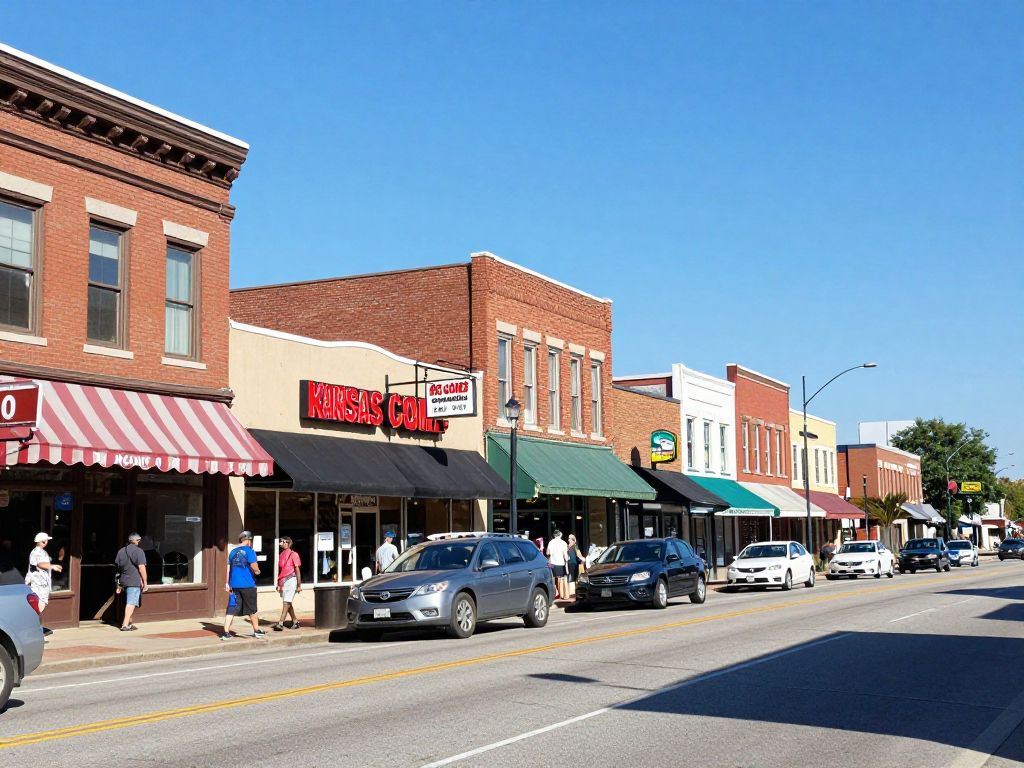
Kansas City, Missouri, January 5, 2026
In Kansas City, local businesses face significant challenges due to Missouri’s property tax framework, which has led to dramatic increases in tax bills after reassessments. Although Kansas City thrives with entrepreneurial innovation and economic growth, property tax mechanisms can create unexpected financial pressures on commercial property owners. There’s a growing conversation about reforming these systems to foster a more predictable environment for business operations in the region.
Kansas City, MO – As the entrepreneurial spirit continues to thrive across the heartland, local businesses in Kansas City, MO, and throughout the state of Missouri are constantly innovating and adapting. Our city stands as a testament to the power of private investment and individual determination, with a robust economy attracting new ventures and fostering community growth. However, even the most resilient businesses face challenges, and sometimes, the very mechanisms designed to ensure fairness in our economic system can inadvertently create hurdles.
A recent examination of Missouri’s property tax framework reveals a complex picture, particularly for commercial property owners. While designed to provide a cap on overall tax revenue increases, the state’s primary tool isn’t always translating into direct relief for businesses. This situation highlights the critical balance between ensuring stable public funding and fostering an environment where Kansas City MO business can flourish without unexpected burdens. Understanding these intricacies is essential for safeguarding the vitality of our local economy and supporting the Missouri MO entrepreneurs who drive its progress.
The Unexpected Burden on Business
Rising Assessments, Rising Bills
Business owners in Missouri have experienced significant and sometimes dramatic increases in their property tax bills following recent biennial reassessments. For example, in Hamilton, Missouri, some commercial property tax bills have surged by as much as 393% after their buildings were reassessed. Similarly, in Jackson County, which includes parts of Kansas City, MO, some businesses, like Blip Coffee Roasters, faced a 626% increase in their tax assessment from 2023, resulting in a substantial tax bill. Such increases can place immense pressure on Kansas City small business operations, directly affecting their ability to invest, expand, and create jobs within the community.
Missouri law mandates that real estate property assessments are conducted every odd-numbered year, based on current, fair market value. The value established for an odd-numbered year typically carries over to the subsequent even-numbered year, unless physical changes are made to the property. The challenge for commercial properties is that there is no state-level annual cap on how much their valuations can increase from year to year, unlike some protections that exist for residential properties. This absence of a “guardrail” leaves businesses vulnerable to sudden and unpredictable increases, making long-term financial planning difficult.
A Tale of Two Tax Structures
The state’s primary mechanism for capping property tax rates is rooted in the Hancock Amendment, a constitutional provision that mandates tax rates be lowered when property values rise faster than inflation, aiming to limit overall revenue growth for taxing districts. However, most taxing districts across Missouri operate with a single tax rate that applies uniformly to all property types—residential, commercial, agricultural, and personal.
The implication of this single-rate structure is significant: if commercial property values within a district rise at a faster rate than the average increase across all property types, the tax burden can effectively shift, leading to disproportionately higher bills for those commercial properties. This phenomenon has been described as “diluting the rollback effect”. An exception exists in St. Louis County, which adopted a system of separate tax rates by subclass in 2003. Following the 2023 reassessment, St. Louis County saw 71% of its taxing entities reduce residential property tax rate ceilings and 63% reduce commercial property tax ceilings, demonstrating a more targeted relief mechanism. This model offers a different perspective on how property tax caps could be structured to provide more precise relief.
Missouri’s Property Tax Cap: A Closer Look
Constitutional Intent vs. Commercial Reality
The intent behind state-level property tax limitations is to prevent government revenue from growing excessively without voter approval. While beneficial for limiting the overall tax burden on citizens, the current application in many Missouri districts means that the constitutional cap on total revenue doesn’t prevent individual property owners from facing steep increases, particularly when their property’s assessed value outpaces the average for the district. This creates a situation where the “cap” functions more as a limit on the taxing district’s total collection rather than a direct brake on a specific property’s tax liability.
The Circuit Breaker: Relief for Whom?
It is important to differentiate the broader property tax rate cap from Missouri’s “circuit breaker” tax credit program. This program is a state-level initiative designed to provide property tax relief for specific qualifying residents, primarily senior citizens and individuals with disabilities, by offering a credit for a portion of their real estate taxes or rent paid. Recent legislative changes, effective January 1, 2026, have expanded this credit, increasing income exemption levels and maximum credit amounts for eligible seniors and disabled veterans. While this program offers vital support to vulnerable citizens, it does not extend to commercial property owners, highlighting a distinct gap in relief mechanisms for businesses facing rapid assessment increases.
Fostering Entrepreneurial Growth in Kansas City
A Dynamic Landscape for Startups
Despite the challenges posed by property tax assessments, Kansas City continues to be a vibrant hub for entrepreneurial innovation and Midlands economic growth. The region boasts one of the highest growth rates in the Midwest and is recognized for its diverse economy, with no single sector dominating more than 15% of overall employment. This diversity, coupled with a low cost of living and competitive office space costs, makes Kansas City an attractive destination for startups and entrepreneurs. Programs like the University of Missouri-Kansas City’s (UMKC) Regnier Venture Creation Challenge actively promote entrepreneurship through business plan and pitch competitions.
Resources for Resilience
Kansas City is also home to a robust ecosystem of support for small businesses. The Missouri Small Business Development Center (SBDC) at UMKC offers comprehensive coaching, education, and resources, assisting entrepreneurs from concept to maturity. In 2024 alone, the SBDC at UMKC helped start 32 new small businesses, provided over 4,200 consulting hours, and supported the creation and retention of thousands of jobs, contributing to over $275 million in increased sales in the region. Additionally, initiatives like Digital Sandbox KC provide crucial proof-of-concept funding to accelerate innovations, showcasing the community’s commitment to nurturing new ventures. These resources underscore the region’s proactive approach to fostering small-business resilience and ensuring a supportive environment for Missouri MO entrepreneurs.
Calls for Clarity and Predictability
Navigating the Appeal Process
For businesses facing unexpectedly high tax bills, the appeal process offers a formal avenue to challenge assessments. However, this process can be lengthy and cumbersome, with thousands of appeals still pending from previous assessment cycles in Jackson County. Business owners have voiced concerns that the current system makes it difficult to plan their financial futures and may force them to raise prices, ultimately affecting customers and the local economy. This situation underscores the need for streamlined, transparent processes that provide timely resolution for affected businesses.
Seeking Fairer Frameworks
Many business owners and local leaders are advocating for reforms to the property tax system that would introduce more predictability and fairness for commercial properties. The call for an annual cap on property valuation increases for commercial buildings, similar to some residential protections or the subclass-specific rates adopted in St. Louis County, is gaining traction. Implementing clearer guidelines and more equitable assessment practices could mitigate the adverse effects of sudden tax spikes, allowing Missouri MO entrepreneurs to allocate resources more effectively towards innovation and growth. A regulatory environment that minimizes unexpected financial shocks can significantly enhance the attractiveness of Kansas City, MO, for ongoing business investment and expansion.
Conclusion
The journey of a Kansas City small business is often defined by innovation, hard work, and a commitment to community. While Missouri’s property tax system, particularly its application of rate caps, presents a unique challenge for commercial property owners, the underlying resilience and entrepreneurial spirit of our city remain strong. The significant resources dedicated to supporting new ventures and fostering economic growth, alongside a growing conversation about more predictable tax frameworks, underscore a collective desire to create an optimal environment for businesses.
As our city looks to the future, including major opportunities like the FIFA World Cup 2026, the continued dialogue around balanced tax policies and robust support for entrepreneurs will be paramount. We encourage all readers to engage with local businesses, support the innovators shaping our landscape, and stay informed about the ongoing efforts to ensure Kansas City, MO, remains a beacon of economic opportunity and community insight. Your involvement helps build a stronger, more predictable economic future for everyone in the Midlands.
Frequently Asked Questions (FAQ)
- What is the main issue with Missouri’s property tax rate cap for business owners?
- Missouri’s property tax rate cap is designed to limit overall revenue growth for taxing districts, not to cap individual property tax increases. This means if commercial property values rise faster than the average, the tax burden can shift, leading to significantly higher tax bills for businesses, even when the overall tax rate is “rolled back” for the district.
- Are there examples of businesses being affected by these tax increases?
- Yes, in Hamilton, Missouri, some business owners have seen property tax bills increase by as much as 393% after reassessments. In Jackson County, which includes parts of Kansas City, MO, a business experienced a 626% increase in its tax assessment.
- Does Missouri’s “circuit breaker” tax credit help businesses?
- No, the “circuit breaker” tax credit program in Missouri primarily provides property tax relief for qualifying residents, specifically senior citizens and disabled individuals, not businesses. This state-level program offers a credit for a portion of their real estate taxes or rent paid.
- How often are properties reassessed in Missouri?
- Missouri law requires real estate property assessments to be conducted every odd-numbered year.
- Are there different property tax structures within Missouri?
- Yes, most taxing districts in Missouri use a single tax rate for all property types. However, St. Louis County adopted a system of separate tax rates by subclass in 2003, which has allowed for more targeted rate reductions for residential and commercial properties.
Key Features of Missouri’s Property Tax Environment
| Feature | Description | Scope |
|---|---|---|
| Hancock Amendment | Constitutional provision requiring tax rates to be lowered when property values rise faster than inflation, aiming to cap overall revenue growth for taxing districts. | State-level |
| Property Reassessment Cycle | Missouri law requires real estate property assessments to be conducted biennially, in odd-numbered years. | State-level |
| Typical Tax Rate Structure | Most taxing districts use a single tax rate applied to all property types (residential, commercial, agricultural, personal). | State-level |
| St. Louis County Tax Structure | Adopted a system of separate tax rates by subclass in 2003, allowing for more targeted property tax rate reductions. | County-level |
| Commercial Property Tax Increases | No annual cap on property valuation increases for commercial buildings, leading to potentially dramatic tax bill hikes. | State-level |
| “Circuit Breaker” Tax Credit | State-level program providing property tax relief specifically for qualifying senior citizens and disabled individuals. | State-level |
| UMKC Regnier Venture Challenge | A business plan and pitch competition promoting entrepreneurship. | Local (Kansas City) |
| Missouri SBDC at UMKC | Provides coaching, education, and resources for growing and developing businesses. | Local (Kansas City) |
Deeper Dive: News & Info About This Topic
HERE Resources
Kansas City Attorneys Embrace Solo Practices Fueling Innovation
Wyandotte County Residents Prepare for Mayoral Election
Overland Park City Council Election Addresses Housing Needs
The Grand Seeks Additional Tax Abatement Amid Rising Crime
Frank White Jr. Recall Marks Historic Change in Jackson County
Local Developer Announces 25 Affordable Homes in Kansas City
Kansas City Police Board Proposes Significant Budget Increase
Phil LeVota Appointed Interim Jackson County Executive
Kay Barnes Appointed as Temporary Jackson County Executive
Kansas City Takes Control of Paul Robeson Middle School

Author: STAFF HERE KANSAS CITY WRITER
The KANSAS CITY STAFF WRITER represents the experienced team at HEREKansasCity.com, your go-to source for actionable local news and information in Kansas City, Jackson County, and beyond. Specializing in "news you can use," we cover essential topics like product reviews for personal and business needs, local business directories, politics, real estate trends, neighborhood insights, and state news affecting the area—with deep expertise drawn from years of dedicated reporting and strong community input, including local press releases and business updates. We deliver top reporting on high-value events such as American Royal World Series of Barbecue, Dia De Los Muertos, and Planet Anime Kansas City. Our coverage extends to key organizations like the Greater Kansas City Chamber of Commerce and United Way of Greater Kansas City, plus leading businesses in healthcare, finance, and entertainment that power the local economy such as Children's Mercy Hospital, Government Employees Health Association, and AMC Entertainment. As part of the broader HERE network, including HEREStLouis.com, we provide comprehensive, credible insights into Missouri's dynamic landscape.