
Kansas City, MO, January 22, 2026
Kansas City is experiencing rapid technological growth, driven by substantial investments from major companies like Google and Meta, which are establishing data centers. While this boom promises economic prosperity, there are significant concerns regarding public health and resource management, particularly in terms of energy and water consumption. Local leaders are striving to foster a balance between innovation and community well-being to ensure that growth benefits all residents.
Kansas City, MO
KC’s Tech Boom: Balancing Innovation with Public Health
As Kansas City embraces its role as a burgeoning hub for data centers and artificial intelligence, the promise of economic growth is significant, yet understanding the potential community impacts, particularly concerning public health, is crucial for fostering sustainable prosperity.
The spirit of entrepreneurial innovation is undeniably a driving force behind Kansas City’s rapid emergence as a central destination for technological advancement. Major investments from industry leaders like Google and Meta are transforming the landscape, bringing with them a surge of private capital and high-tech infrastructure. This development, often fueled by proactive local initiatives and an environment supportive of business expansion, underscores the Midlands’ economic growth and commitment to becoming a leader in the digital economy. However, as our city welcomes these powerful new enterprises, a balanced perspective requires us to also consider the broader implications for our neighborhoods and the well-being of our citizens, ensuring that progress serves everyone.
The arrival of large-scale data centers, while a testament to Kansas City MO business appeal, also initiates discussions around resource management and community safeguards. The careful consideration of these aspects ensures that the benefits of technological progress are realized without unintended burdens on existing infrastructure or public health. By fostering an environment where innovation thrives alongside responsible development, Kansas City can continue to attract significant investment while maintaining its unique community character.
The Digital Frontier: Kansas City’s Data Center Expansion
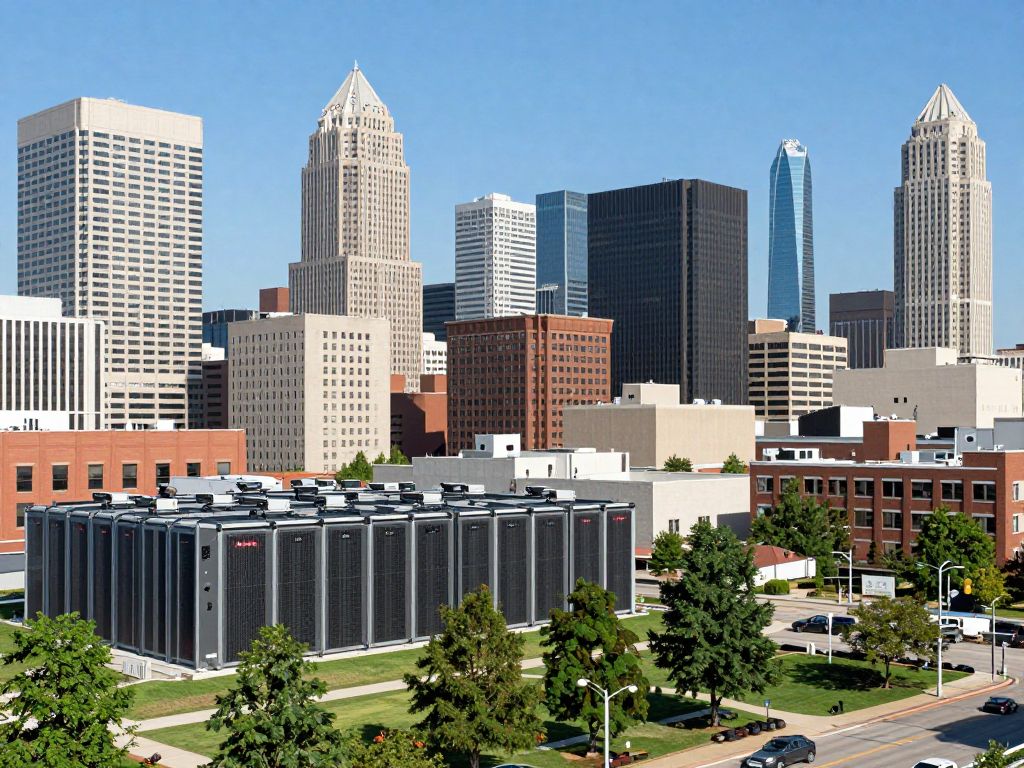
Kansas City is rapidly solidifying its position as a national leader in data center development, attracting substantial investments that highlight its strategic advantages in fiber optic infrastructure and central location. Companies such as Google, Meta, Edged Energy, and QTS are expanding their footprints, with Google announcing a $1 billion data center as part of a broader $2 billion Midwest expansion. Meta has also chosen Kansas City for a hyperscale data facility, recognizing the region’s infrastructure and power reliability. Furthermore, the city’s Crossroad Arts District is seeing a significant redevelopment with Patmos retrofitting the former Kansas City Star Press Pavilion into a 100-megawatt data center, a $1 billion project that will also include office and event spaces. In Independence, Nebius, a European corporation, plans a massive $6.6 billion data center campus, which will include building its own power plant. The region currently hosts at least 22 data centers, with more in development, signaling robust Kansas City small business and technological expansion. While developments like these mark significant progress, the landscape for such projects can be dynamic; for instance, suburban Kansas City-based QTS Data Centers previously withdrew plans for a data center campus in Porter County (Nationwide scope).
These projects bring significant economic promises, including job creation during construction and a notable number of permanent full-time positions—around 100 jobs per center, though some can be remote. For areas like Independence, such developments are projected to generate tens of millions of dollars in tax revenue, benefiting local government, Jackson County, school districts, libraries, and community colleges. This influx of capital and technological expertise reinforces the region’s appeal for Missouri MO entrepreneurs and skilled professionals.
Energy Demands and Utility Considerations
The advanced technology within data centers operates continuously, making them exceptionally energy-intensive. These facilities typically consume 10 to 50 times more energy than a standard commercial office building. A single large data center can demand between 60 and 90 megawatts of power during peak times, which is equivalent to the electricity usage of more than 15,000 households. The growing reliance on artificial intelligence (AI) further intensifies this demand, with one request to an AI assistant consuming significantly more energy than a simple internet search.
This escalating energy consumption raises important questions about the broader impact on the existing utility infrastructure and residential utility rates. Nationwide, the electricity demand from data centers is projected to double by 2030 and could account for nearly 12% of the nation’s total electricity consumption by 2028. To meet this surging demand, utilities may consider extending the operational life of existing power plants or building new infrastructure, which could potentially impact electricity costs for everyday consumers. While public service commissions in both Missouri and Kansas have implemented tariffs on large data centers to help protect residential ratepayers, the sheer volume of power consumed by these facilities means their presence can still contribute to the overall strain on the system.
Water Resources and Environmental Footprint
Beyond electricity, data centers are substantial consumers of water, primarily for cooling their vast arrays of servers. The process of cooling these facilities can require an immense amount of freshwater, with some data centers consuming between 3 and 5 million gallons of water daily, a volume comparable to the annual water usage of a small city. For example, Meta’s data center in Kansas City’s Northland could potentially use up to 9.5 million gallons of water per day. Google’s U.S. data centers collectively consumed 12.7 billion liters of fresh water in 2021, a figure that increased to over 30 billion liters within three years. This intensive water usage highlights a critical concern, particularly in regions that may experience drought or have limited water supplies.
The environmental footprint of data centers extends beyond water and energy. The constant operation of these facilities necessitates backup power systems, often relying on diesel generators. These generators, while crucial for ensuring uninterrupted service, emit fine particulate matter and nitrogen oxides, which are pollutants linked to various health issues, including respiratory problems, asthma attacks, heart disease, stroke, premature birth, and even early death. The cumulative effect of such emissions can compound existing air quality challenges in communities already near industrial areas or transportation hubs. Furthermore, the construction and ongoing operation of data centers involve raw materials like rare earth minerals, the mining of which has significant environmental and health consequences. The proper recycling of electronic waste is also a challenge, with improper disposal contributing to soil and water pollution.
Regulatory Pathways and Sustainable Innovations
In response to community concerns and the evolving landscape of data center development, the Kansas City Council has taken steps to enhance oversight. Recent zoning changes, for instance, now limit where data centers can be located and introduce new restrictions, including requirements for utility service reviews, noise limits, and setbacks from residential areas. While some critics argue that these changes are a first step, they represent a proactive approach by local government to balance economic development with community well-being and environmental stewardship.
Many developers are actively pursuing sustainable and innovative solutions to mitigate environmental impacts. Patmos, for example, is implementing advanced cooling technologies such as liquid cooling, rear-door heat exchangers, and immersion cooling, alongside robust power distribution systems to enhance efficiency. Google’s Kansas City data center is designed to operate on 400 megawatts of carbon-free energy, aligning with its commitment to achieve 24/7 carbon-free operations by 2030. Similarly, Microsoft is utilizing closed-loop cooling systems in some of its facilities, which aim for zero water consumption for cooling, though this approach can increase energy intensity. These efforts demonstrate a recognition within the industry of the importance of developing more environmentally responsible digital infrastructure, driven by both corporate sustainability goals and increasing public awareness.
Fostering Responsible Economic Growth
The rapid expansion of the data center industry in Kansas City presents both significant opportunities for economic prosperity and vital challenges related to environmental sustainability and public health. The entrepreneurial spirit that drives these technological advancements must be matched by a commitment to responsible development that prioritizes the long-term well-being of the community. As Kansas City MO business leaders and policymakers navigate this growth, continued dialogue and collaborative efforts between developers, community groups, and regulatory bodies are essential. Striking this balance ensures that the benefits of technological innovation translate into a stronger, healthier, and more vibrant Kansas City for all its residents, reinforcing the principles of prudent stewardship and sustainable progress that benefit the entire Midlands economic growth.
Frequently Asked Questions
- What are the primary environmental impacts of data centers in Kansas City?
- Data centers in Kansas City have several environmental impacts, including high energy consumption, significant water usage for cooling, and air pollution from backup diesel generators.
- How much electricity do data centers consume?
- Data centers are highly energy-intensive, consuming 10 to 50 times more energy than a commercial office building. A single large data center can use 60-90 megawatts of power, equivalent to over 15,000 households. Nationwide, electricity demand from data centers is projected to double by 2030 and could reach nearly 12% of the nation’s total electricity by 2028.
- How much water do data centers use for cooling?
- Data centers require substantial amounts of water for cooling. A single data center can use 3-5 million gallons of water daily, a volume comparable to the annual water usage of a small city. Meta’s data center in Kansas City’s Northland could use up to 9.5 million gallons of water per day. Google’s U.S. data centers consumed over 30 billion liters of fresh water in 2024.
- What health risks are associated with data centers?
- Backup diesel generators, used by data centers, emit fine particulate matter and nitrogen oxides. These pollutants are linked to respiratory issues, asthma attacks, heart disease, stroke, premature birth, and early death.
- What is Kansas City doing to regulate data center development?
- The Kansas City Council has approved zoning changes that limit where data centers can be built and introduce new restrictions, including requirements for utility service reviews, noise limits, and setbacks from residential areas.
- Are data centers contributing to higher utility bills for residents?
- Concerns exist that data center energy demands could lead to higher utility rates for residents. While State-level public service commissions in Missouri and Kansas have approved tariffs for large data centers to protect residential ratepayers, the large users still contribute to the overall system, which could potentially increase costs.
Key Features and Impacts of Data Centers in Kansas City
| Feature/Impact Area | Details | Scope |
|---|---|---|
| Economic Growth & Investment | Kansas City is a growing hub with major investments ($1B Google data center, part of $2B Midwest expansion). Nebius plans a $6.6B data center in Independence. Projects create construction jobs and around 100 full-time jobs per center. Generates significant tax revenue for local entities. | Local, State-level |
| Energy Consumption | Data centers are highly energy-intensive (10-50x more than commercial offices). A single large center can use 60-90 MW (equivalent to over 15,000 households). Nationwide electricity demand from data centers is projected to double by 2030 and reach nearly 12% of national electricity by 2028. | Local, Nationwide |
| Water Usage | Significant water required for cooling. A single data center can use 3-5 million gallons/day (more than a small city’s annual usage). Meta’s Northland data center could use up to 9.5 million gallons/day. Google’s U.S. data centers consumed over 30 billion liters of fresh water in 2024. | Local, Nationwide |
| Air Quality & Emissions | Backup diesel generators emit fine particulate matter and nitrogen oxides, linked to respiratory and cardiovascular health issues, and premature birth. Climate pollution from power plants running data centers Nationwide could more than double by 2035. | Local, Nationwide |
| Noise Pollution | Potential for constant humming noise from cooling systems or generators impacting nearby residents. | Local |
| Utility Rates | Concerns exist about data center energy demands potentially increasing residential utility rates. State-level public service commissions in Missouri and Kansas have approved tariffs for large data centers to protect residential ratepayers. | Local, State-level |
| Land Use & Materials | Data centers require significant land area (e.g., former KC Star Pavilion is two city blocks). Production uses rare earth minerals, and improper electronic waste recycling contributes to pollution. | Local, Nationwide |
| Regulation & Mitigation | Kansas City Council has implemented zoning changes (limits on location, utility review, noise limits, setbacks). Developers are adopting advanced cooling and aiming for carbon-free energy (e.g., Google’s KC data center aims for 400 MW carbon-free energy by 2030). | Local |
Deeper Dive: News & Info About This Topic
HERE Resources
Kansas City’s Logistics Sector Navigates Record-Long Freight Recession
KC Tech Talent Takes Off: Great Jobs KC & UMKC Fuel Innovation
Midwestern Metros: Springfield vs. Kansas City Livability Debate
Mid-Sized Missouri Cities Spark New Economic Growth
KC Districts Boost Safety: 13 Felony Arrests Strengthen Business Confidence
Consumer Sentiment Declines in Phoenix Metro Area
U.S. Representative Condemns Reported DHS Detention Center in Kansas City
EPR Properties Set to Unveil 2025 Financial Results
National Furniture Chain Exits: Impact on Kansas City’s Retail Landscape
Kansas City’s Digital Leap: Nebius Data Center Fuels Growth