

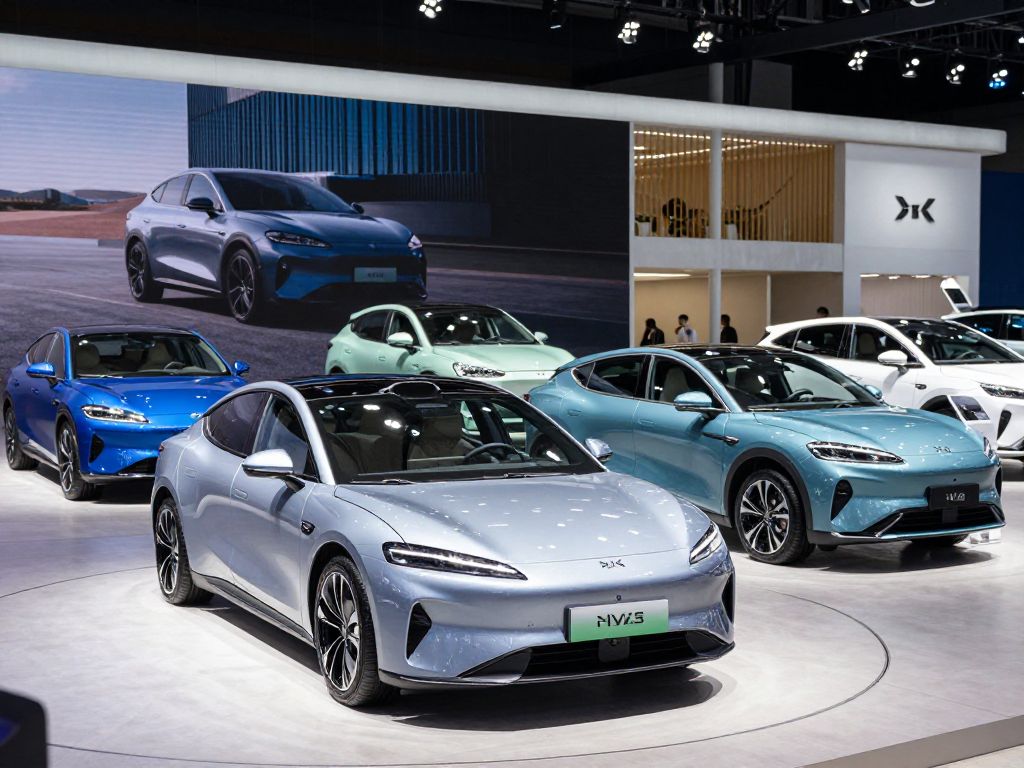
Detroit, MI, January 16, 2026
The Detroit Auto Show reflects a shift in the automotive industry, as electric vehicles (EVs) share the spotlight with hybrid and gasoline-powered cars. This change is driven by evolving consumer preferences amid rising concerns about the costs and practicality of EV ownership. Automakers are responding by adapting production strategies, emphasizing hybrid models, and navigating a complex global market. Local businesses in Kansas City must remain agile to thrive in this changing landscape and cater to diverse consumer needs.
EVs Face Reality Check at Detroit Auto Show
Kansas City entrepreneurs and consumers alike are observing a notable shift in the automotive landscape, as evidenced by recent trends at the Detroit auto show. The once exclusive spotlight on electric vehicles (EVs) is now broadening, reflecting evolving consumer preferences and the adaptive strategies of manufacturers.
This dynamic environment underscores the importance of innovation and responsiveness in business. While the long-term trajectory for electrification remains, current market adjustments highlight the practical challenges and opportunities that demand agile leadership from businesses, including those in the Kansas City MO business community.
The Evolving Showcase: From Exclusivity to Diversity
Detroit, MI – The North American International Auto Show, a traditional barometer of the automotive industry’s direction, has recently showcased a shift in emphasis. Tracks previously dedicated solely to electric vehicles (EVs) are now open to a wider array of powertrains, including hybrids and gasoline-powered cars. This change signals an industry-wide reevaluation, reflecting shifts in consumer demand and manufacturing strategies. Todd Szott, chairman of the event and an auto dealer, noted that the show aligns with transformations in consumer preferences and the automotive sector’s EV landscape.
For Kansas City small business owners and automotive enthusiasts, this indicates a move toward emphasizing “consumer choice” in vehicle offerings. While some experts express concern about the long-term competitive implications for American automakers on the global stage, especially when compared to markets like China that show continued strong EV growth, the current exhibition underscores a pragmatic response to market realities.
Consumer Sentiment: Prioritizing Practicality
Nationwide, consumer enthusiasm for electric vehicles has seen a moderation in its growth rate. While annual U.S. EV sales continue to increase, the pace of growth has notably slowed. In the first quarter of 2024, U.S. EV sales rose 2.6% year over year but fell 15.2% compared to the fourth quarter of 2023. This represents the first quarter-over-quarter downturn since the second quarter of 2020. Total U.S. sales of electrified vehicles, which include plug-in hybrids, grew by only 1% in 2025.
Factors contributing to this trend include consumer concerns about the initial purchase price of EVs, the cost of installing home charging infrastructure, and potential battery replacement costs. A significant portion of non-EV owners, 64%, cite purchase price as a major barrier, with home charger installation costs (55%) and battery costs (48%) also being key considerations. Range anxiety, or concern over a vehicle’s driving range, remains a primary hesitation for 47% of U.S. electric vehicle buyers, even surpassing price for some. Charging time is also a concern for 44% of consumers. Many consumers nationwide are still waiting for technology to improve before buying an EV.
Manufacturers Adapt: A Hybrid Resurgence
In response to shifting consumer demand and market conditions, major automakers are adjusting their production strategies. Several manufacturers are now delaying some electric vehicle initiatives and redirecting investment towards gasoline-powered and hybrid models. Ford Motor Co., for example, announced charges related to electrification efforts and ended production of an all-electric F-150 Lightning truck. The company is prioritizing enhancements to its gasoline-powered F-150. General Motors has also encountered financial challenges and modified its EV commitments.
The demand for hybrid vehicles is surging nationwide, with sales of gas-electric hybrid vehicles in the United States increasing five times faster than fully electric automobiles in February 2024. Hybrid electric vehicle sales grew by 53% in 2023, reaching nearly 1.2 million units. Toyota, a long-standing leader in hybrid technology, saw 29% of its 2023 sales come from hybrid vehicles, a figure expected to reach 45% by the end of 2024. Manufacturers like Ford and Toyota are expanding their production capacity for hybrids. This strategic pivot allows automakers to offer a blend of internal combustion engine (ICE), hybrid, plug-in hybrid, or battery electric solutions to meet diverse consumer needs. For Missouri MO entrepreneurs involved in the automotive supply chain or related services, this signals a need for flexibility and adaptation to these diversified production approaches.
Global Context and Local Innovation
While the U.S. market adjusts, the global landscape for EVs presents a more varied picture. In 2025, U.S. sales of electrified vehicles, including plug-in hybrids, grew by only 1%, with a U.S. pure-EV market share just under 8%, which was a slight decline from 2024. In contrast, China experienced a 17% increase in electrified vehicle sales, and Europe reported a 33% rise in the same category. Globally, EV sales grew by around 30% in 2024, with total global car sales nearing 80 million units, driven by hybrid and electric cars. China accounts for about 70% of EVs sold globally and over 40% of global car manufacturing.
This global dynamic underscores the importance of domestic innovation and competitive strategies for American automakers. For Kansas City MO businesses, particularly those in manufacturing or technology, observing these global shifts is crucial for identifying potential partnerships, supply chain adjustments, and areas for specialized service development. The call for American manufacturers to adapt to foreign competition by sustaining a strong EV presence through innovative electric offerings remains vital for maintaining competitiveness.
Economic Resilience and the Path Forward for Midlands Economic Growth
The automotive industry’s current recalibration, balancing EV aspirations with market realities, has significant implications for the broader economy. Changes in manufacturing focus affect supply chains, investment strategies, and job creation. Businesses, particularly small and medium-sized enterprises, must demonstrate resilience and an entrepreneurial spirit to navigate these transitions effectively. The shift away from certain internal combustion engine components impacts suppliers, who must adapt by converting production lines to EV parts or diversifying their offerings. Research and development continue to be crucial for staying competitive and developing components suitable for EVs and more technologically advanced vehicles.
For Midlands economic growth, including the Kansas City region, these adjustments highlight the need for a robust and adaptable business ecosystem. Encouraging private investment, fostering entrepreneurial innovation in advanced manufacturing, and ensuring a supportive regulatory environment can help local businesses thrive amidst these industry-wide changes. The ability of local companies to pivot, innovate, and meet evolving consumer demands will be key to long-term prosperity.
Conclusion
The automotive industry is currently experiencing a period of significant adjustment, moving from an exclusive focus on electric vehicles to a more diversified approach that includes a renewed emphasis on hybrids and traditional gasoline cars. This pivot is largely driven by pragmatic considerations of consumer demand, manufacturing profitability, and infrastructure development. While the long-term transition to electrification is expected to continue, the pace and pathway are being reshaped by market forces.
For the Kansas City region, these developments offer both challenges and opportunities. Local businesses and entrepreneurs are encouraged to closely monitor these trends, embracing innovation and adaptability to meet the evolving needs of the automotive sector and its consumers. Supporting a dynamic local economy means recognizing these shifts and empowering our Missouri MO entrepreneurs to lead with ingenuity and flexibility. Engage with your local business community, stay informed about market changes, and champion the spirit of innovation that drives economic progress.
Frequently Asked Questions
Q: What shift is occurring at the Detroit auto show regarding electric vehicles?
A: The Detroit auto show is now featuring tracks open to hybrids and gasoline-powered vehicles, alongside electric vehicles, reflecting a broader industry adjustment away from an exclusive focus on EVs.
Q: What are the main reasons for the slowdown in U.S. EV sales growth?
A: The primary reasons include consumer concerns about the initial purchase price of EVs, the cost of installing home charging infrastructure, potential battery replacement costs, and range anxiety.
Q: How are automakers responding to the changing EV market?
A: Automakers are delaying some electric vehicle initiatives and increasing investment in hybrid and gasoline-powered models, with a significant resurgence in hybrid vehicle production.
Q: How do U.S. EV sales compare to global trends?
A: In 2025, U.S. sales of electrified vehicles, including plug-in hybrids, grew by only 1%, with a U.S. pure-EV market share just under 8%, a slight decline from 2024. In contrast, China saw a 17% increase, and Europe reported a 33% rise in electrified vehicle sales.
Key Trends in the Automotive Industry Shift
| Feature | Description | Geographic Scope |
|---|---|---|
| Detroit Auto Show Focus | Shift from exclusive EV tracks to inclusion of hybrids and gasoline vehicles. | Detroit, MI |
| U.S. EV Sales Growth (Q1 2024) | 2.6% increase year-over-year, but a 15.2% decrease from Q4 2023. | Nationwide |
| Top Consumer Concerns for EVs | Purchase price (64%), home charger installation cost (55%), battery replacement cost (48%), and range anxiety (47%). | Nationwide |
| Hybrid Vehicle Sales Growth (2023) | Increased by 53%, reaching nearly 1.2 million units. | Nationwide |
| China Electrified Vehicle Sales Growth (2025) | 17% increase in plug-in hybrid and electric vehicle sales. | China |
| Europe Electrified Vehicle Sales Growth (2025) | 33% increase in plug-in hybrid and electric vehicle sales. | Europe |
Deeper Dive: News & Info About This Topic
HERE Resources
Immigration Raid Raises Concerns for South Korean Workers in Georgia
Congress Passes Trump’s $4.5 Trillion Tax and Spending Bill
Nationwide Protests Mark ‘No Kings’ Day Against Trump Policies
Nationwide Protests Erupt Against Trump’s Policies
Two Tornadoes Strike Kansas City Area Amid Severe Thunderstorms
Elon Musk Critiques Trump’s Tax Bill Amid Controversy
Arrest Made in Devastating New Jersey Wildfire
Elon Musk Reduces Role at Government Efficiency Department Amid Tesla Struggles
Severe Tornado Outbreak Causes Widespread Destruction Across U.S.
Kansas City Residents Embrace Golf Carts: What You Need to Know