

Kansas City, Missouri, January 15, 2026
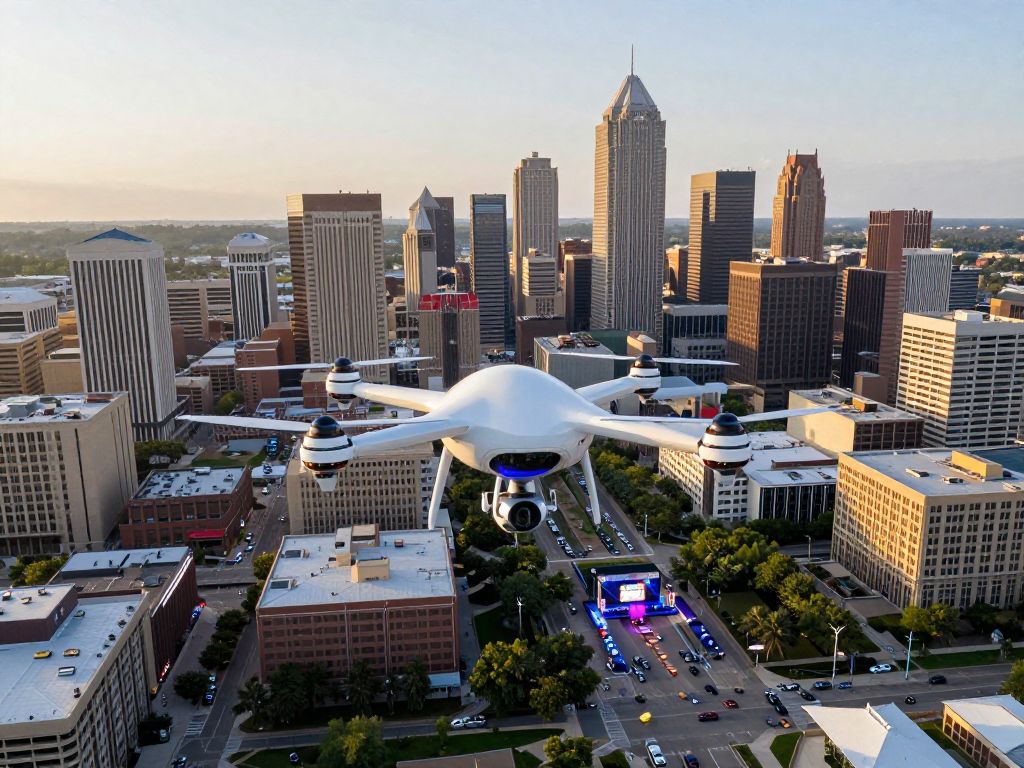
Kansas City is making significant investments in advanced drone security in preparation for the 2026 FIFA World Cup. The Department of Homeland Security has announced a substantial $115 million nationwide initiative focused on bolstering security through innovative drone and counter-drone technologies. With inter-agency cooperation and local leadership, Kansas City aims to provide a safe environment for the expected influx of international visitors. The Federal Emergency Management Agency has also allocated $250 million in grants to support security measures across host states.
Kansas City Readies for World Cup with Advanced Drone Security Investment
Kansas City, MO – As the excitement builds for the 2026 FIFA World Cup, federal, state, and local entities are making significant strides in ensuring the safety and security of this monumental event. A recent announcement from the Department of Homeland Security underscores a nationwide commitment to leveraging cutting-edge technology, a move that will directly bolster security efforts right here in our vibrant community.
The proactive adoption of innovative solutions, coupled with robust local leadership and inter-agency cooperation, is setting a new standard for large-scale event management. This strategic approach highlights how focused investment and streamlined processes can enhance public safety without unnecessary bureaucratic hurdles, ultimately fostering a secure environment for residents and visitors alike. Kansas City’s spirit of civic innovation and personal initiative is proving instrumental in preparing for the global spotlight.
Nationwide Investment in Aerial Security
The Department of Homeland Security (DHS) announced on Monday, January 12, 2026, a significant investment totaling $115 million into advanced drone and counter-drone technologies. This nationwide initiative is specifically aimed at fortifying security for the upcoming 2026 FIFA World Cup and various events celebrating America’s 250th birthday. The decision comes amidst a growing awareness of potential threats posed by the misuse of unmanned aircraft systems (UAS) by malicious actors.
To streamline the acquisition and deployment of these vital technologies, DHS has launched a new Program Executive Office for Unmanned Aircraft Systems and Counter-Unmanned Aircraft Systems. This office is tasked with ensuring that security capabilities can effectively outpace evolving threats, marking a forward-thinking approach to national security for major gatherings.
FEMA Grants Empowering Host States
In a testament to effective inter-governmental coordination, the Federal Emergency Management Agency (FEMA) awarded $250 million in grants in December to the 11 states hosting FIFA World Cup 2026 matches, along with the National Capital Region. This rapid deployment of funding exemplifies a responsive governmental structure prioritizing critical security needs for large-scale public events.
Missouri, as a key host state for the World Cup, is set to receive approximately $14.2 million from this FEMA grant. Neighboring Kansas is also earmarked for $5.3 million. These funds are designed to bolster each state’s capacity to detect, identify, track, and mitigate unmanned aircraft systems. This allocation directly supports local law enforcement and emergency services in acquiring the necessary tools and training to manage aerial risks, reflecting a commitment to equipping those on the front lines.
Kansas City’s Proactive Security Posture
Kansas City, MO, is proudly one of the U.S. cities selected to host matches for the FIFA World Cup 2026, an event anticipated to draw an estimated 650,000 international visitors. Local authorities are recognizing the immense scale of this event, describing it as an “unprecedented challenge” on par with hosting the Olympic games. However, Kansas City is demonstrating remarkable foresight and collaborative spirit in its preparations.
Our local leaders and law enforcement agencies have already made significant investments. The Kansas City, Kansas Police Department (KCKPD) operates a Real-Time Intelligence Crime Center (RTICC), which integrates live camera monitoring, license plate readers, and a “Drone as a First Responder” program, alongside gunfire detection systems. Furthermore, Kansas City has already invested $1.8 million in drone detection systems, showcasing an early commitment to advanced security measures. The Kansas Highway Patrol (KHP) will administer Kansas’s portion of the FEMA grant, with $2.5 million directly supporting KHP and additional funds going to sub-applicants, including the Kansas City, Kansas Police Department, for counter-UAS technology and training.
The Kansas City Police Department (KCPD) is developing comprehensive and scalable security plans, which include the deployment of thousands of law enforcement officers, activating the National Guard, and calling upon police and sheriff’s deputies from across both Missouri and Kansas. This multi-jurisdictional cooperation is a cornerstone of effective event security, ensuring a unified front in protecting our community.
The Role of Counter-Drone Technology
The investment in counter-drone technology brings a multitude of benefits to securing large public gatherings like the World Cup. These systems are designed to offer real-time threat detection, allowing security teams to identify potential aerial risks instantly. Capabilities include advanced sensors, radio-frequency detection, cameras, and even lasers.
Moreover, modern counter-drone solutions facilitate non-destructive neutralization through methods such as signal jamming and geo-fencing, which can safely compel unauthorized drones to return to their origin or land. This approach minimizes risks to attendees and prevents disruptions to events. The scalability of these anti-drone systems means they can be tailored to protect venues of various sizes, ensuring comprehensive coverage for Arrowhead Stadium and associated fan zones. Beyond defense, drones are also being actively utilized by law enforcement for aerial surveillance, crowd monitoring, perimeter security, and providing critical real-time intelligence for emergency responses.
Collaborative Planning and Local Leadership
Kansas City’s approach to World Cup security is characterized by extensive collaborative planning involving numerous institutions, including law enforcement, fire and EMS, hospitals, and various state and federal partners. Regular meetings through the Mid-America Regional Council (MARC) facilitate the sharing of plans and resources, ensuring a harmonized strategy. Kyle Postell, a former U.S. Secret Service Agent, has been appointed as Director of Safety & Security for KC2026, bringing invaluable experience in cyber and physical security, and critical infrastructure protection.
Representatives from Kansas City, MO, including Dr. Erica Carney (Medical Director, KCMO), Ryan Koehler (Chief Oversight Firefighter Paramedic, KCMO), and Captain Abigail Martinez (Kansas City Police Department), have actively participated in national safety and security conferences for the FIFA World Cup 2026. Captain Martinez further gained insights from an observation trip to the EUROS 2024 tournament in Germany, highlighting a commitment to learning from international best practices. This level of local leadership and engagement has positioned Kansas City as a recognized leader in proactive planning among host cities.
While the Unified Government of Wyandotte County (Kansas City, KS) has faced challenges with proposed budget cuts impacting funding, particularly for overtime, the commitment to securing the World Cup remains strong, with requests for additional funding submitted to cover these vital operational needs. This ongoing dialogue underscores the importance of local choice and leadership in navigating fiscal realities while prioritizing community safety for such significant events.
Securing Our Future, Together
The federal investment in counter-drone technology, coupled with the substantial FEMA grants and Kansas City’s proactive local initiatives, represents a robust effort to safeguard the 2026 FIFA World Cup. This strategic foresight and collaborative spirit are essential for managing events of this magnitude, demonstrating how civic innovation and individual achievement contribute to a thriving and secure community.
As Kansas City prepares to welcome the world, these security measures ensure that the focus remains on celebration and community engagement, free from disruption. We encourage all residents to stay informed and engaged in the ongoing preparations for this historic event. The success of the FIFA World Cup 2026 will be a testament to Kansas City’s ability to host a world-class event safely and efficiently, further enhancing our reputation as a premier destination for global gatherings. This collective endeavor highlights the benefits of focused action and inter-agency collaboration in fostering widespread civic involvement and local partnerships for the greater good of our community.
Keywords: Kansas City MO events, FIFA World Cup 2026, drone security Kansas City, community growth Kansas City, civic innovation MO
Frequently Asked Questions (FAQ)
What is the Department of Homeland Security’s investment in counter-drone technology?
The Department of Homeland Security (DHS) is investing $115 million into drone and counter-drone technologies.
What is the purpose of this nationwide investment?
This nationwide investment is primarily for securing the 2026 FIFA World Cup (FIFA 2026) venues and events celebrating America’s 250th birthday (America250).
Has DHS created a new office for this purpose?
Yes, DHS has launched a new Program Executive Office for Unmanned Aircraft Systems and Counter-Unmanned Aircraft Systems to rapidly procure and deploy these technologies.
How does this impact Kansas City?
Kansas City, MO, is one of the 11 U.S. cities hosting FIFA World Cup 2026 matches, making it a direct beneficiary of enhanced security measures and investments.
Did Kansas and Missouri receive any grants for counter-drone capabilities?
Yes, in December, FEMA awarded $250 million in grants for counter-drone capabilities to the 11 states hosting FIFA World Cup 2026 matches and the National Capital Region. Missouri will receive about $14.2 million, and Kansas is earmarked to receive $5.3 million from this grant.
What types of counter-drone technologies are being developed or deployed?
Counter-drone technologies include sensors, radio-frequency detection, lasers, cameras, signal jammers, drone capture devices (nets), and kinetic systems. AI is expected to assist in identifying threats.
What are the benefits of using counter-drone technology for large events?
Benefits include real-time threat detection, non-destructive neutralization (e.g., signal jamming, geo-fencing), scalability for large events, protection of high-profile guests, and peace of mind for attendees.
Key Features of World Cup Security Enhancements
| Feature | Details | Scope |
|---|---|---|
| DHS Investment | $115 million into drone and counter-drone technologies. | Nationwide |
| Purpose of Investment | Secure 2026 FIFA World Cup venues and America’s 250th birthday events. | Nationwide |
| New DHS Office | Program Executive Office for Unmanned Aircraft Systems and Counter-Unmanned Aircraft Systems to procure and deploy technology. | Nationwide |
| FEMA Grants for Host States | $250 million in grants for counter-drone capabilities to 11 host states and National Capital Region. | Nationwide (State-level distribution) |
| Missouri FEMA Grant | Approximately $14.2 million for counter-drone capabilities. | State-level |
| Kansas FEMA Grant | Earmarked for $5.3 million for counter-drone capabilities. | State-level |
| Kansas City, MO Role | One of 11 U.S. cities hosting FIFA World Cup 2026 matches. | Local |
| Kansas City Local Investment | Already purchased $1.8 million in drone detection systems. | Local |
| KCKPD Capabilities | Real-Time Intelligence Crime Center (RTICC) with live camera monitoring, License Plate Readers, Drone as a First Responder, and Gunfire Detection. | Local |
| Types of Counter-Drone Tech | Sensors, radio-frequency detection, lasers, cameras, signal jammers, drone capture devices (nets), kinetic systems, AI integration. | Nationwide |
Deeper Dive: News & Info About This Topic
HERE Resources
Kansas City Begins 2026 World Cup Preparations
Missouri Secures $14M for World Cup Drone Defense
Tragic Assassination of Turning Point USA Founder
Community Gathers at Cal Poly Vigil to Honor Activist
Charlie Kirk’s Assassination Sparks Nationwide Rallies
Memorial Service for Charlie Kirk at State Farm Stadium
Europe Gears Up for Troop Deployment to Ukraine
Kansas City events checklist: what to bring, where to park and safety tips
No Plans for Meeting Between Putin and Zelenskyy
The Great Escape of the ‘Devil in the Ozarks’