
Kansas City, MO, January 3, 2026
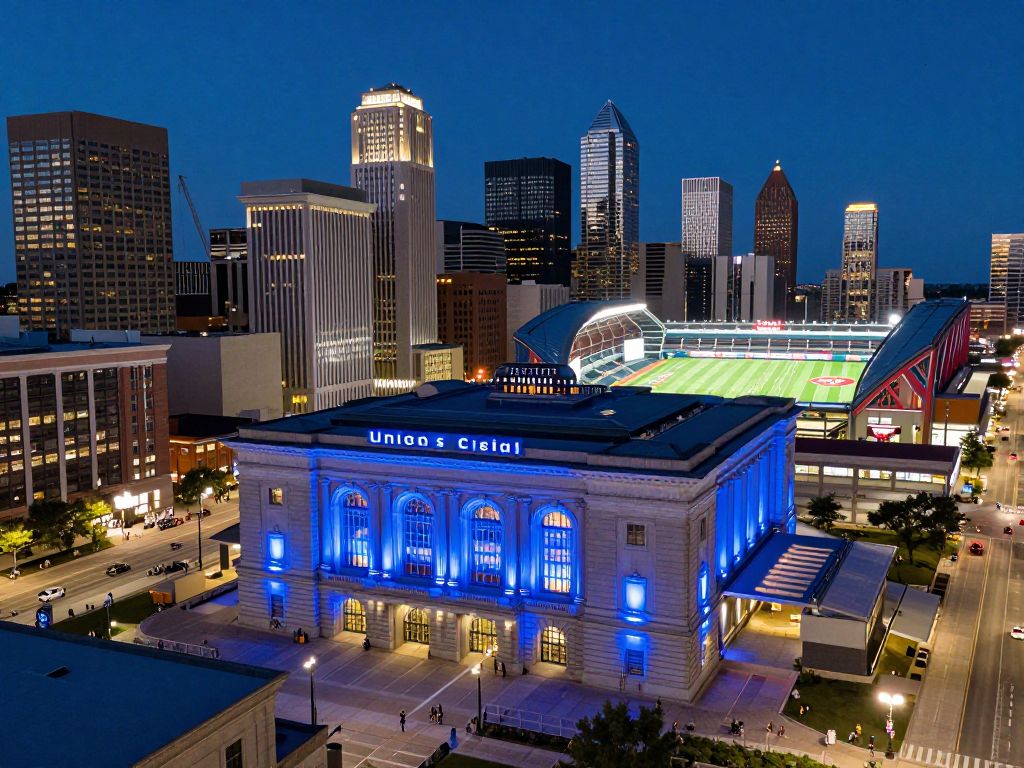
Union Station in Kansas City, MO, has illuminated its facade in blue to express support for a new downtown stadium for the Kansas City Royals. As discussions intensify regarding the future of professional sports teams in the area, local leaders and business groups are emphasizing the economic and community benefits associated with the proposed multi-billion-dollar public-private partnership project, envisioned as a vibrant sports and entertainment hub that could boost local businesses and create numerous job opportunities.
Kansas City, MO – In a vibrant display of civic enthusiasm, Union Station recently illuminated its iconic facade in a striking blue, publicly signaling its strong backing for a proposed new downtown stadium for the Kansas City Royals. This gesture comes at a pivotal moment for Kansas City, Missouri, as discussions around the future of its professional sports teams intensify, following news that the Kansas City Chiefs plan to relocate across the state line to Kansas.
The quest for a new, modern ballpark district has become a significant focal point for Kansas City MO business leaders and local residents alike, sparking conversations about urban development, economic growth, and the role of private investment in shaping the city’s landscape. The debate highlights themes of entrepreneurial innovation and small-business resilience as the community considers the potential benefits and challenges of such a transformative project.
For years, Kansas City has been recognized for its dynamic economic growth and commitment to fostering a thriving environment for Missouri MO entrepreneurs. The potential downtown Royals stadium project represents a substantial undertaking, envisioned as a multi-billion-dollar public-private partnership aimed at creating a vibrant sports and entertainment hub. The proposed development is not merely about a baseball stadium but about weaving a new economic engine into the heart of the city, offering opportunities for local businesses and enhancing community life.
A Vision for Downtown Revitalization
Royals ownership has expressed a long-term vision to move the team from Kauffman Stadium, which opened in 1973, to a new downtown location, citing the need for a modern facility and the desire to create a more integrated fan experience. Initial proposals for a new ballpark district suggested a comprehensive development that would include retail spaces, offices, hotels, and residential units, including affordable housing options. This approach aims to foster year-round activity, extending beyond the 81 home games played each season.
The proposed downtown stadium projects an investment that could surpass $2 billion, with a significant portion expected to come from private capital. This private-public partnership model is central to the project’s financing, with the team committing hundreds of millions of dollars. Such substantial private investment underscores a belief in Kansas City’s economic potential and the ability of entrepreneurial ventures to drive progress.
Navigating Site Selection and Community Impact
Throughout the planning stages, several potential sites in Kansas City, MO, have been considered. The Crossroads district was initially selected, with plans to build on the former Kansas City Star printing press site. This location was highlighted for its proximity to existing entertainment areas and its connectivity to the KC Streetcar system. However, this proposal faced concerns regarding the potential displacement of small businesses and the impact on the arts district. In response to community feedback and advocacy from city officials, the Royals later adjusted plans to keep Oak Street open to traffic, demonstrating an adaptive approach to urban planning.
Another prominent site under consideration is Washington Square Park, situated across Main Street from Union Station near Crown Center. This location is seen as advantageous due to its existing public ownership, ample nearby parking, and its connectivity to the expanding KC Streetcar line and extensive bus transit system. Proponents suggest that this site could integrate seamlessly with existing tourism and entertainment infrastructure, providing unparalleled access for fans and visitors.
The Role of Public Funding and Community Benefits
A key aspect of the stadium debate involves public funding. An existing 3/8-cent sales tax in Jackson County, traditionally used for maintaining the Truman Sports Complex, was proposed for extension to help finance both a new Royals ballpark and renovations for Arrowhead Stadium. However, Jackson County voters rejected this sales tax extension in April 2024. This outcome prompted the Kansas City Chiefs to finalize plans to move to Kansas, where a significant financial incentive package utilizing STAR bonds was approved.
Despite the setback, efforts continue to secure the Royals’ future in Kansas City, Missouri. Local leaders and business groups have advocated for swift action, emphasizing the importance of keeping both teams in the region. A robust Community Benefits Agreement (CBA) was also part of the discussion for the proposed stadium, outlining commitments to areas such as employment benefits, affordable housing, childcare, workforce assistance, education, and diversity in business participation. The Royals’ proposed CBA, valued at $140 million, aimed to support minority- and women-owned businesses and provide job protections for stadium workers.
Economic Projections and Local Business Opportunities
The economic impact of a new downtown stadium is a topic of considerable discussion. Projections from various reports suggest that a new ballpark district could generate thousands of construction and permanent jobs, alongside significant economic output. For instance, the KC Current women’s soccer stadium, a separate but related development, is projected to generate over $1 billion in economic output for the State of Missouri over 30 years and create over a thousand jobs. Similarly, the proposed Royals project was estimated to create over 20,000 construction jobs and have an economic impact of $2.8 billion during construction.
The potential for a downtown stadium also presents unique opportunities for Kansas City small business growth. The Royals have made commitments to support displaced small businesses with rent assistance and relocation aid, as well as offering reduced lease pricing for local businesses within the ballpark district. Furthermore, a proposed investment in community-based organizations would provide entrepreneurship training and support, fostering a dynamic environment for new ventures. The integration of a stadium with the existing downtown infrastructure, including the extended streetcar line, is expected to enhance visitor experiences and support local hotels, restaurants, and entertainment venues, boosting the overall Midlands economic growth.
Moving Forward with Vision and Prudence
The ongoing dialogue surrounding a downtown Royals stadium reflects Kansas City’s ambition to secure its place as a premier destination for sports, culture, and business. While the path to a new stadium involves complex financial negotiations and careful consideration of community impacts, the underlying spirit of entrepreneurial innovation and civic engagement remains strong. The city stands at a crucial juncture, evaluating how best to leverage private investment and strategic planning to ensure sustained economic growth and an enhanced quality of life for its residents.
Kansas City’s leaders and citizens are encouraged to remain engaged in these discussions, contributing to a future where thoughtful development and community well-being go hand-in-hand. Supporting local businesses and understanding the broader economic implications of such projects will be key to unlocking the full potential of Kansas City, MO, in the years to come.
Frequently Asked Questions about the Proposed Downtown Kansas City Royals Stadium
- What is the proposed location for the new Kansas City Royals stadium?
- The primary site currently under consideration for the new Kansas City Royals stadium is Washington Square Park, located across Main Street from Union Station near Crown Center.
- What is the estimated cost of the new Royals stadium and ballpark district?
- The entire development, including the stadium and a surrounding district with retail, office, hotel, and residential projects, is envisioned as a $2 billion venture.
- How will the proposed Royals stadium be funded?
- The project is expected to be a public-private partnership. Royals ownership plans to invest $1 billion of private funds into the project, with additional funding from other sources.
- What was the outcome of the sales tax extension vote in Jackson County?
- A 40-year extension of an existing 3/8-cent sales tax to help finance a new Royals ballpark and renovate Arrowhead Stadium for the Kansas City Chiefs was put to a vote on April 2, 2024, but the ballot amendment failed, with 58% of voters rejecting it.
- What are the potential economic benefits of a downtown stadium?
- Projections suggest the project could generate thousands of construction and permanent jobs, with an estimated $2.8 billion economic impact during construction. It is also expected to create new jobs and stimulate spending in local hotels, restaurants, and entertainment venues year-round.
- How will the new stadium address small business concerns?
- The Royals have announced commitments to support small businesses, including rent support, relocation assistance for displaced businesses, reduced lease pricing for local businesses within the ballpark district, and investment in entrepreneurship training.
- What is the significance of Union Station lighting up blue?
- Union Station illuminated its facade in blue to publicly show its support for a new downtown Kansas City Royals stadium, demonstrating civic enthusiasm for the project.
Key Features of the Proposed Downtown Kansas City Royals Stadium Project
| Feature | Description | Scope |
|---|---|---|
| Proposed Primary Site | Washington Square Park, near Union Station and Crown Center. | Kansas City, MO |
| Total Estimated Project Cost | $2 billion for the stadium and surrounding ballpark district. | Kansas City, MO |
| Private Investment Commitment | Royals ownership committed $1 billion of private funds. | Kansas City, MO |
| Public Funding Mechanism (Proposed) | Extension of an existing 3/8-cent sales tax (rejected by voters in April 2024). | Jackson County, Missouri (State-level) |
| Expected Economic Impact (Construction) | Estimated $2.8 billion economic impact and 20,000 construction jobs. | Regional |
| Community Benefits Agreement (CBA) | Proposed $140 million commitment for employment benefits, affordable housing, childcare, workforce assistance, education, and diversity in business. | Jackson County, Missouri (State-level) |
| Small Business Support Initiatives | Rent support, relocation assistance, reduced lease pricing, entrepreneurship training investment. | Kansas City, MO |
| Connectivity | Seamless integration with KC Streetcar system, bus transit, and existing downtown infrastructure. | Kansas City, MO |
| Anticipated Opening Date | Targeted for 2028 (pending funding and site finalization). | Kansas City, MO |
Deeper Dive: News & Info About This Topic
HERE Resources
Kansas City Businesses Adjust to a Post-Playoff Landscape
Kay Barnes Appointed as Temporary Jackson County Executive
How to prioritize Kansas City weekend events: plan a crowd-free, budget-friendly itinerary
Kansas City attractions with free admission: plan a budget-friendly day
Kansas City nightlife on weeknights: best spots for live music, cheap drinks and no lines
Paid vs free Kansas City weekend events: what’s worth your time and money
Kansas City attractions accessible guide: stroller, wheelchair and low-walk stops
Things to do in Kansas City for First-Time Visitors: Hit the Best Stops Fast
Kansas City weekend events planner: a stress-free, family-friendly 48-hour guide
How to score last-minute Kansas City concerts tickets without paying scalpers